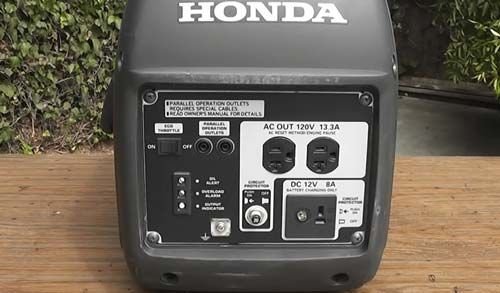
When you’re looking for reliable portable power, the conversation inevitably turns to Honda generators. For years, the Honda EU2000i was the gold standard, a compact marvel that kept lights on, devices charged, and adventures humming. But what happens when the benchmark gets an upgrade, or when you start exploring other options? This guide dives deep into Honda EU2000i comparisons & alternatives, helping you navigate the world of portable power to find the perfect generator for your needs. Whether you’re eyeing a dependable classic, its powerful successor, or a worthy contender from another brand, we’ll cut through the noise (pun intended) to give you the clear, actionable insights you deserve.
At a Glance: Your Portable Power Cheat Sheet
- Honda EU2000i (Discontinued): A legendary quiet workhorse, excellent for light-to-moderate needs. Still a great secondhand option if it meets your power demands.
- Honda EU2200i (Current Model): The upgraded champion. More power, better efficiency, easier maintenance, and smart features. The go-to for many new buyers.
- Why Upgrade? The EU2200i handles higher-demand appliances (like RV ACs), offers better durability, and includes modern conveniences like app monitoring.
- Beyond Honda: Numerous alternatives exist, ranging from budget-friendly options to high-power beasts. Focus on your specific wattage needs, noise tolerance, and budget.
- Key Decision Factors: Power output (running vs. starting watts), noise level, portability, fuel efficiency, specific features (electric start, parallel kit), and brand reputation.
The Enduring Legacy: Why the Honda EU2000i Was (and Is) a Legend
Before we pit it against its successor or look at the broader market, let's acknowledge the EU2000i. Released in the early 2000s, this little powerhouse redefined what a portable generator could be. It wasn't just quiet; it was whisper-quiet for its time, sipping fuel efficiently while delivering a respectable 1,600 rated watts and 2,000 peak watts. Its Honda GX100 engine (98.5cc) was legendary for its reliability.
For campers, RVers, tailgaters, and homeowners needing basic backup power, the EU2000i was often the first and only recommendation. It could run lights, charge phones, power a small fridge, or even handle a basic coffee maker. Its 45.6-pound weight made it genuinely portable, easy for one person to carry.
However, even legends have their limits. The EU2000i could struggle with high-demand appliances, particularly those with significant starting wattage requirements, like many microwaves or RV air conditioners. There was also a known issue with an earlier fuel valve design. While it's discontinued and no longer comes with a factory warranty, a well-maintained EU2000i can still be a fantastic find on the secondhand market if its capabilities align perfectly with your power needs. For a deeper dive into this classic, you might want to check out our comprehensive Honda EU2000i generator guide.
The Successor Steps Up: Honda EU2000i vs. EU2200i – A Head-to-Head
In 2018, Honda unveiled the EU2200i, a generator designed to build upon the EU2000i's success while addressing its limitations. This isn't just a minor refresh; it's a significant evolution.
Power Boost & Engine Prowess
The most immediate difference is power. The EU2200i boasts 1,800 rated watts and 2,200 maximum watts – a crucial 10% increase over its predecessor. This might not sound like much on paper, but in real-world scenarios, those extra watts make all the difference. The EU2200i can comfortably handle appliances that would cause the EU2000i to strain or trip, such as a microwave, certain electric saws, or the often-tricky startup of a 13,500 BTU RV air conditioner.
This power jump comes from a more robust Honda GXR120 engine (121cc), which replaces the GX100. The GXR120 is not just bigger; it’s designed for increased durability and efficiency under sustained loads, featuring better cooling and optimized combustion.
Efficiency, Noise, and Running Smarter
Despite the higher output, the EU2200i maintains an impressive fuel efficiency. It can run for up to 8.1 hours on 0.95 gallons of fuel at 25% load – the same runtime as the EU2000i, but with more power available. A key addition here is the integrated fuel shut-off valve, which allows you to run the carburetor dry before storage, preventing stale fuel issues.
Noise-wise, the EU2200i is marginally quieter at minimal loads, operating between 48 and 57 dBA compared to the EU2000i's 53 to 59 dBA. Both are exceptionally quiet for generators, but the EU2200i nudges ahead, making it even less obtrusive during those peaceful camping trips or quiet neighborhood power outages.
Smarter Design & Easier Maintenance
Honda engineers clearly listened to user feedback when designing the EU2200i. Oil changes, a notorious fiddle on the EU2000i, are now much cleaner and easier thanks to redesigned oil filler and drain ports. The air filter is also more accessible for routine cleaning.
The controls are color-coded, simplifying startup for anyone, even first-time users. And in a nod to modern connectivity, the EU2200i offers Bluetooth capability via Honda’s "My Generator" smartphone app. This lets you monitor runtime, fuel levels, and even get maintenance reminders right from your phone – a feature completely absent from the EU2000i.
Durability & Environmental Standards
The EU2200i isn't just more powerful; it's built to last longer. Improved ventilation, a more robust stator/rotor design for better heat dissipation, and the fixed fuel valve issue all contribute to enhanced longevity. Environmentally, it also meets stricter EPA and CARB regulations, making it a more eco-conscious choice with improved emissions controls.
Weight & Availability
At 46.5 lbs, the EU2200i is only marginally heavier than its predecessor (45.6 lbs), maintaining its compact and highly portable nature. As a current model, it also benefits from active warranty support (3-year residential/commercial) and readily available parts, giving new buyers peace of mind.
Shared Strengths
Both the EU2000i and EU2200i feature Honda's renowned Eco-Throttle System, which automatically adjusts engine speed to match the load, saving fuel and reducing noise. Both also offer parallel capability, meaning you can link two identical units with a parallel kit to double your power output. For the EU2200i, this means a formidable 4,400 watts – enough for serious home backup or high-power RV needs. Interestingly, both models still forgo an electric start and a dedicated fuel gauge, relying on manual pull-start and visual fuel checks.
Quick Comparison Table: EU2000i vs. EU2200i
| Feature | Honda EU2000i | Honda EU2200i |
|---|---|---|
| Rated Watts | 1,600W | 1,800W |
| Max Watts | 2,000W | 2,200W |
| Engine | Honda GX100 (98.5cc) | Honda GXR120 (121cc) |
| Runtime (25% load) | Up to 8.1 hrs on 0.95 gal | Up to 8.1 hrs on 0.95 gal |
| Noise Level | 53 to 59 dBA | 48 to 57 dBA |
| Weight | 45.6 lbs | 46.5 lbs |
| Fuel Shut-off | No | Yes (for carb dry-out) |
| Maintenance | Standard oil change, air filter | Easier oil changes, accessible air filter |
| Connectivity | None | Bluetooth (My Generator app) |
| Durability | Good, but some fuel valve issues on older models | Improved ventilation, robust stator/rotor, fixed valve |
| Availability | Discontinued (secondhand only) | Current model (new, active warranty) |
| Best For | Basic power, light use, budget-conscious secondhand | Higher demands, modern features, long-term reliability |
The Verdict: Is the EU2200i Worth the Upgrade (or the Initial Investment)?
If you already own an EU2000i and it comfortably meets your power needs, there's no urgent rush to upgrade. It's still a fantastic, reliable machine. However, for new buyers, or those who find their EU2000i occasionally tripping breakers with certain appliances, the EU2200i is the clear winner. Its superior power, efficiency, ease of use, and advanced features justify its slightly higher cost for a truly advanced, long-term portable generator solution.
Beyond the Red: Exploring Honda EU2000i & EU2200i Alternatives
While Honda sets a high bar, they aren't the only players in the portable inverter generator game. Many excellent alternatives exist, some offering specific advantages in price, features, or power output. When considering these options, it's crucial to first understand calculating your exact wattage needs and what makes an inverter generator tick.
1. The Direct Competitors (Premium Brands)
Brands like Yamaha, Generac, and Champion produce high-quality inverter generators that directly compete with Honda in terms of performance, noise level, and reliability.
- Yamaha: Often considered Honda's closest rival, Yamaha generators (like the EF2200iS) are known for their quiet operation, excellent fuel efficiency, and robust build quality. They often have similar power outputs and parallel capabilities, making them a strong contender for those who value performance and reliability. Some users even prefer Yamaha's quieter tone at certain loads or specific design features.
- Generac: While known for their larger home standby generators, Generac also offers a solid line of portable inverters (e.g., GP2200i). These often come at a slightly lower price point than Honda or Yamaha but still deliver reliable power with good noise control and fuel efficiency. They might offer unique features like a power dial that integrates start, run, and stop functions.
- Champion: Champion has carved out a strong niche by offering a fantastic balance of features, performance, and aggressive pricing. Their 2000-watt and 2500-watt inverter generators are very popular, often including features like electric start or dual-fuel capability (running on gasoline or propane) at a price significantly below Honda. While slightly louder than a Honda, they still fall within acceptable ranges for most uses.
2. The Budget-Friendly Options
For those on a tighter budget who still need reliable power, several brands offer excellent value. These often come with a trade-off in noise level or overall longevity compared to premium brands, but can be perfectly adequate for occasional use.
- Harbor Freight (Predator): Predator inverter generators have gained significant popularity for their surprisingly good performance at a fraction of the cost. While they may not be as whisper-quiet or as refined as a Honda, they deliver the promised power and are a strong choice for intermittent use or when budget is paramount.
- WEN: WEN generators are another excellent value proposition. They often boast features found on more expensive models, like parallel capability and multiple outlets, while keeping costs down. Their noise levels are competitive, though typically a few decibels higher than Honda.
- Firman, Ryobi, etc.: Many other brands offer similar budget-friendly inverter generators. The key here is to read reviews carefully, understand the warranty, and manage expectations regarding extreme longevity or lowest-in-class noise.
3. Higher Power Alternatives (When 2200W Isn't Enough)
Sometimes, even 2,200 watts (or 4,400 with a parallel kit) isn't enough. If you need to run multiple large appliances, a bigger RV AC, or a small cabin, you might look at:
- Larger Inverter Generators: Honda, Yamaha, Generac, and others offer larger inverter models (e.g., Honda EU3000iS, Generac iQ3500) that provide 3,000-3,500 running watts. These are still relatively quiet but significantly heavier and less portable.
- Open-Frame Inverter Generators: These combine the clean power of an inverter with the more robust (and often louder) design of a traditional open-frame generator. They're typically more affordable for higher wattage output.
- Traditional Open-Frame Generators: For sheer raw power and the lowest cost per watt, traditional generators are still king. However, they are significantly louder, less fuel-efficient, and produce "dirty" power unsuitable for sensitive electronics. Only consider these if noise isn't an issue and you only need to power tools or non-sensitive appliances.
Choosing Your Power Partner: Key Decision Criteria
Navigating the landscape of portable generators can feel overwhelming. To make the best decision, ask yourself these critical questions, focusing on your specific needs: This section serves as a practical inverter generator buying guide.
1. What Are Your Power Requirements? (The Wattage Game)
This is the absolute most important factor. Make a list of everything you plan to power simultaneously.
- Running Watts: The continuous power an appliance needs to operate.
- Starting Watts (Surge Watts): The brief burst of extra power some appliances (especially those with motors, like fridges, ACs, or power tools) need to start up. This number can be 2-3 times higher than running watts.
- Tip: Sum the running watts of all items, then identify the single item with the highest starting wattage. Add that starting wattage to the sum of the running watts of all other items. That gives you your minimum generator size. Don't forget to add a buffer!
2. How Quiet Do You Need It To Be? (The dBA Factor)
Noise level, measured in decibels (dBA), is a major differentiator.
- Camping/RVing: You'll want the quietest possible (sub-60 dBA at 25% load) to avoid disturbing neighbors and for a pleasant experience. Honda and Yamaha excel here.
- Home Backup (rural): Noise might be less critical than for camping, but still a factor for comfort.
- Job Site: Often, noise is less of a concern, and raw power or durability takes precedence.
- Context: A normal conversation is around 60 dBA. A refrigerator hum is 40 dBA. A difference of 10 dBA is perceived as roughly doubling or halving the loudness. Understanding understanding generator noise levels is crucial for comfort.
3. How Portable Does It Need to Be? (Weight & Size)
Are you frequently moving it, or will it sit in one place?
- Lightweight (< 60 lbs): Easy for one person to carry. Ideal for tailgating, light camping, small RVs. (EU2200i fits here)
- Medium (60-100 lbs): Might have wheels or require two people. Good for larger RVs, more substantial home backup.
- Heavy (> 100 lbs): Likely on wheels, often with an electric start. More for semi-permanent home backup or job sites.
4. What's Your Budget? (Price vs. Features)
Inverter generators range from a few hundred dollars to several thousand.
- High-End (Honda, Yamaha): Premium price for top-tier reliability, quietness, and features.
- Mid-Range (Generac, Champion): Great balance of price, performance, and features.
- Budget (Predator, WEN): Excellent value, but might compromise slightly on noise, features, or long-term durability.
5. What Features Matter to You?
- Parallel Capability: Allows you to link two generators for double the power. Essential if you might expand your needs later.
- Electric Start: Push-button convenience, especially nice on larger, heavier models. (Honda EU2000i/2200i lack this).
- Fuel Shut-off/Drain: Crucial for easy storage and preventing carburetor issues (EU2200i has this).
- Fuel Gauge: Simple convenience, but surprisingly absent on many premium models.
- Multiple Outlets: Ensure you have the right type and number of outlets (120V, 30A RV, USB).
- CO Shutoff Sensor: An increasingly common safety feature that automatically shuts off the generator if carbon monoxide levels get too high.
- App Connectivity: For remote monitoring and control (EU2200i offers this).
- Dual Fuel: The ability to run on both gasoline and propane for versatility.
Common Use Cases: Finding Your Generator's Purpose
Let's look at how different generators fit different scenarios:
1. Camping & Tailgating
- Needs: Quiet operation, portability, enough power for lights, phone charging, a fan, maybe a small TV or blender.
- Ideal: Honda EU2200i, Yamaha EF2200iS, or a smaller Champion/WEN inverter.
- Why: Low noise keeps peace with neighbors and campsite rules. Lightweight for easy transport.
2. RVing & Van Life
- Needs: Sufficient starting power for an RV air conditioner (often 10k-15k BTU), microwave, charging house batteries, lights. Parallel capability is a plus.
- Ideal: Honda EU2200i (especially if paralleled), Generac iQ3500, Champion 3500-watt inverter.
- Why: RV ACs require significant starting watts. A single EU2200i can often handle a 13,500 BTU AC; two in parallel handle larger ones or more appliances. For a comprehensive look, consider powering your RV effectively.
3. Home Backup (Emergency)
- Needs: Reliability, enough power for essential circuits (fridge, freezer, lights, furnace fan, well pump, charging).
- Ideal: Honda EU2200i (for essentials), two EU2200i in parallel (for more comfort), or a larger 3000-watt to 5000-watt inverter.
- Why: Inverter generators provide clean power safe for sensitive electronics. For extended outages, fuel efficiency is key.
4. Job Sites & Power Tools
- Needs: High starting watts for power tools (saws, drills, compressors), durability, ruggedness. Noise is less of a concern.
- Ideal: Honda EU2200i (for smaller tools), a larger open-frame inverter, or a traditional generator if sensitive electronics aren't involved.
- Why: Power tools have high surge demands. Durability is critical in a demanding environment.
Keeping Your Power Running: Essential Generator Maintenance
Regardless of which generator you choose, proper maintenance is key to longevity and reliable performance. A little care goes a long way. Check out these portable generator maintenance tips for more details.
- Read the Manual: This is your primary source of truth for your specific model's maintenance schedule.
- Oil Changes: Regularly change the oil according to the manufacturer's recommendations. This is the single most important maintenance task.
- Air Filter: Clean or replace the air filter periodically, especially if operating in dusty conditions.
- Spark Plug: Inspect and replace the spark plug as needed to ensure efficient ignition.
- Fuel Management:
- Always use fresh, high-quality gasoline (ethanol-free if possible).
- Add a fuel stabilizer if storing for more than a month or two.
- Run the carburetor dry before extended storage (this is where the EU2200i's fuel shut-off valve shines).
- Storage: Store your generator in a dry, well-ventilated area. Consider a generator cover for protection.
- Run It Regularly: Start and run your generator under a light load for 15-20 minutes every month or two, even if you don't need it. This keeps components lubricated and fuel flowing, preventing gumming up.
Answering Your Burning Questions
Q: Can I run a microwave with a Honda EU2000i?
A: It depends on the microwave. Many microwaves require 1,000-1,200 running watts, but their starting wattage can spike to 1,500-2,000 watts. The EU2000i, with its 2,000-watt peak, might struggle or trip with a higher-wattage microwave, especially if other items are already running. The EU2200i (2,200 peak watts) is much more capable.
Q: Is the fuel shut-off valve on the EU2200i really that important?
A: Absolutely. It allows you to run the carburetor completely dry before storing the generator. This prevents old fuel from gumming up the carburetor, a common cause of hard starting and engine problems after periods of disuse. It significantly reduces maintenance headaches.
Q: Can I parallel a Honda EU2000i with an EU2200i?
A: No, you cannot. For parallel operation, you must connect two identical generators using the specific parallel kit designed for those models. An EU2000i can only be paralleled with another EU2000i, and an EU2200i with another EU2200i.
Q: Are inverter generators worth the extra cost?
A: Generally, yes, for most consumers. Inverter generators produce "cleaner" power (lower total harmonic distortion) that is safe for sensitive electronics like laptops, smartphones, and medical equipment. They are also significantly quieter, more fuel-efficient, and lighter than traditional open-frame generators of similar wattage. The upfront cost is higher, but the benefits often outweigh it.
Q: How do I know if a used Honda EU2000i is a good buy?
A: When buying used, inspect it thoroughly. Check for obvious damage, listen to the engine, and ask for a demonstration under load. Check the oil and air filter. Ask about its maintenance history and how it was stored. While parts are still available, the lack of warranty is a risk factor.
Powering Forward: Making Your Generator Decision
Choosing the right portable generator, whether it's a trusty Honda EU2000i (if you find a good used one), its advanced successor the EU2200i, or a capable alternative, boils down to a clear understanding of your specific needs. Start with your wattage requirements, consider your noise tolerance, weigh portability against features, and then align these with your budget.
The Honda EU2200i stands as a testament to continuous improvement, offering a potent blend of power, efficiency, and modern convenience that makes it a top choice for new buyers. But don't dismiss the robust competition; other brands provide compelling value and unique features that might be the perfect fit for your lifestyle.
Ultimately, the best generator is the one that reliably provides the power you need, where and when you need it, without breaking the bank or your eardrums. Do your homework, assess your priorities, and you'll be well-equipped to power your life, whatever adventures or outages come your way.